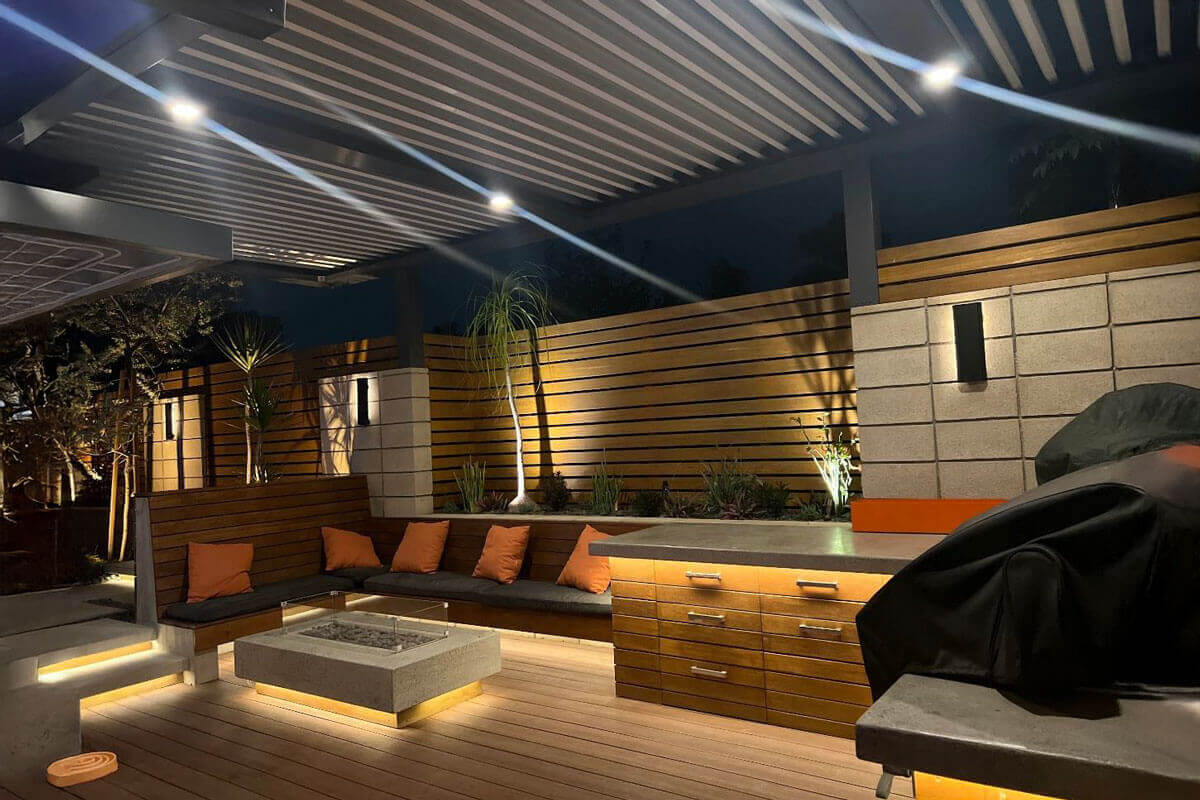
How to Choose a Patio Cover Company in Orange County, CA
Choosing a patio cover company in Orange County begins with your needs being met. Think about shade, rain control, and airflow in coastal sun and Santa Ana winds. If an HOA applies to your property, ask what rules affect design and approvals. Compare companies using the same scope so the finished patio cover matches your goals.
Select a company with a valid CSLB license, liability insurance, and workers’ compensation. Confirm what is included with design, engineering, and the product build. If you want a motorized pergola, request the specific product model. Review the materials and finishes, such as powder-coated aluminum, and ensure there is a clear water management plan in the product design, including gutters and drainage paths.
What do you need from your patio cover?
Each patio serves a unique purpose, so first decide what you want your cover to provide: shade, rain protection, airflow, or all three. Defining your goal will simplify the design process.
Consider whether you prefer shade while maintaining brightness or want to stay dry in the rain. Reflect on your typical patio use, then review the following factors.
Shade need
Assess how much sun you want to block. For patios that get hot in the afternoon, a louvered roof with a 170-degree pivot provides full shade. Motorized adjustable louvers let you choose partial shade or full sun as needed.
Rain need
If you want to sit outside when it rains, pick a cover that keeps water out when closed. Look for interlocking louvers and built-in gutters that direct water away from the roof, keeping the area dry and preventing rain from pooling on your furniture.
Airflow need
Airflow is essential on hot days. A partially opening roof allows heat to escape, and pergolas with motorized louvers or sliding sections can further increase airflow during warm evenings resulting in a cooler space.
Morning vs afternoon sun
Patio orientation influences sun exposure. A cover can block intense afternoon sun from the west while allowing morning light. For sun in winter and shade in summer, consider a motorized louver system that can be adjusted throughout the day via a smart app or voice control.
Wind exposure
For patios exposed to wind, plan for strong gusts. Slightly tilting the louvers allows wind to pass through, reducing lift risk. Ensure the structure is sturdy and properly anchored, and work with a contractor familiar with local conditions who can recommend the best solution.
Electrical needs (lights, fans)
If you plan to add lights, fans, or heaters, incorporate them into the design. Confirm where fixtures, switches, and wire paths should be placed in the frame layout. Ask what channels or beam space the product allows for routing, and use a licensed local electrician and installer for any wiring and connections.
Choose the Patio Cover Style Before You Pick the Company
Patio covers are available in various styles, so decide which best suits your home and usage before comparing companies. A contractor experienced with your preferred style can better address the necessary structural and design details. Common options include:
Adjustable louvers
A louvered patio cover allows you to open, close, or tilt the roof slats, making it easy to adjust shade throughout the day. When fully closed, many systems provide rain protection, making louvers ideal for controlling both light and airflow.
Solid roof
A solid roof patio cover is fixed and uses solid panels, such as traditional aluminum or Pan 6 panels. It provides consistent shade and strong rain protection, though the area underneath will be darker. Choose a solid roof for permanent shade.
Slide-open roof
A slide-open roof allows you to retract panels for an open sky, similar to a sunroof. For example, a Pivot 6 Slide pergola opens its louvers for a clear view. This style offers flexibility for open-air use, shade, and rain protection.
Attached vs freestanding
Decide whether you want the cover attached to your house or freestanding in the yard. An attached cover uses your home for support and requires proper flashing to prevent leaks, while a freestanding pergola uses posts on all sides and can be placed over a pool lounge or in a garden. Some homeowners use multiple freestanding pergolas to create separate zones. Select your preferred type before choosing a company that specializes in that style.
Steps to Choose the Right Patio Cover Company in Orange County
After selecting your preferred patio cover style, choose a qualified patio cover builder in Orange County. Verify their CSLB license, liability insurance, and workers’ compensation, review local project photos, read reviews, and request references. Ensure the written scope lists the product model, finishes, options, and what is included with design and build.
Step 1: Check license, insurance, and permits
Begin by verifying credentials. Ensure the company has an active California license that matches their patio cover work. Request their license number, check its status, and review any violations in the CSLB database.
Request proof of insurance, including general liability and workers’ compensation certificates, and confirm the policy dates are current. Also request the documents you need for your installer or local city office, such as drawings, product specs, and engineering details, as required.
Quick checklist
- License: Get the California license number, then verify it on the CSLB site.
- Insurance: Request liability and workers’ compensation certificates, with current dates.
- Documents: Confirm what plans, specs, and engineering pages you receive.
Step 2: Review Portfolio
Review each company’s portfolio or project gallery to assess their work. Many Orange County contractors customers post photos from cities like Newport Beach, Irvine, and Laguna Hills. Look for variety, build quality, and examples similar to your desired style.
Photos of completed projects show the design’s fit and finish, so zoom in on details like posts, beams, and connection points while checking whether the paint or powder-coating looks even across the structure. If the company posts an “In Action” gallery or videos, review those as well, since video testimonials and adjustment clips demonstrate how the pergola works and how past clients describe the product and final outcome.
Step 3: Local Expertise
Local experience matters for Orange County projects because the sun, salt air, and wind vary across the county. A local patio cover builder specialist knows which product options hold up best in coastal conditions and inland heat.
Coastal areas need corrosion-resistant materials due to salt air, so look for extruded aluminum and powder-coated finishes for durability. Breezy zones can benefit from design choices that reduce uplift and improve comfort.
- Coastal durability: Choose coatings and hardware that resist salty, humid coastal air. Stainless steel hardware helps reduce rust on beachside frames.
- Rainy season planning: Winter storms can dump heavy rain across Orange County cities, so use roof design, gutters, and downspouts to control runoff and route water away from slabs and seating areas.
- Sun and heat planning: Patio orientation changes heat and glare throughout the day. West-facing yards can get harsh afternoon sun in summer, while adjustable louvers can reduce heat during peak hours.
- HOAs and city rules: If an HOA applies, confirm what design approvals are needed before ordering. If permits apply for your property, ask your installer what paperwork they need from the builder.
Step 4: Material Quality
Evaluate materials and build quality in every bid, since patio covers must withstand sun, wind, and rain. Prioritize durable, weather-resistant materials such as fully extruded aluminum and stainless steel hardware, especially in coastal areas.
Review the finish process before signing. Powder-coated finishes enhance UV and corrosion resistance, so ensure coverage is even and resists chipping, peeling, and fading.
Interlocking louvers should seal tightly to prevent water intrusion. Ensure gutters, downspouts, and proper drainage are included, request material samples and written product details, verify the wind rating for your location, and obtain written product warranty coverage for materials and finish.
Step 5: Warranties
A patio cover adds long-term value, and the product warranty terms matter. Start with the manufacturer’s warranty for the patio cover system, confirming how many years are covered and which parts are included.
Many warranties cover the frame and louvers longer than they cover motors or electronics. Ask what is covered for finish, coating, and hardware, what proof is required for a claim, and get all warranty details in writing, including how claims work and whether coverage transfers to a new homeowner.
Step 6: Reputation and Reviews
Research the company’s reputation before hiring by reviewing feedback on Google, Yelp, and other sites, focusing on consistent patterns across multiple jobs. Repeated high ratings and detailed comments indicate stronger trust.
Read reviews for details that affect your home, such as communication, professionalism, and respect for the property. Check mentions of timelines for design and delivery, budget accuracy, and—if problems arose—how the company communicated and resolved them.
Review testimonials on the company website, including videos and client feedback pages, and match review claims with project photos. Look for mentions of design support, order accuracy, and help with product questions after delivery.
Step 7: Communication and Professionalism
Communication matters from the first call through final design approval, so observe how the company responds before you order. Prompt, polite, and patient communication supports a smoother design process.
An order proposal should be clear and detailed, with the product scope and line items specified, including the patio cover model, materials, finishes, and options. Request plain language for anything unclear and ask how changes work before you sign off on the order, ensuring that any size adjustments, motors, or accessories are updated in writing before finalization.
Step 8: Ask for References
Request references before placing an order, since past customers can share insights on the design process, product quality, and communication. Speak with clients who chose a similar patio cover style and ask about their experience from start to finish.
Call references with a short question list. Ask whether the design process was organized, whether the final product matched what was promised, whether finish and options were accurate, and how the company handled questions after delivery.
Questions to ask every patio cover company in Orange County
When you talk with patio cover companies in Orange County, press for specifics and compare answers that name products, list scope, and state responsibilities. Use these questions during calls and site visits.
- What exact model and controls are is included and excluded in the order?
- How is rain managed in the product design, and where does the water route?
- What documents do I receive for HOA or city requirements, if needed?
- What is included versus excluded in the product order?
- What is the production timeline, and what can change delivery dates?
- What product warranty is included, and is it transferable?
- Do you offer referrals to refer local installers in my area?
- What is the process if I request a design change before ordering?
- Can I see a working demo or a completed project in person?
Common Mistakes When You Choose a Patio Cover Company
Mistakes can happen if you rush your decision, and while getting a patio cover is exciting, it’s important to take your time. Use the list below to avoid common problems.
- Comparing price alone: A low price can hide missing product details. Finish quality, hardware grade, and included options may not appear, so compare the written product scope and materials—not price alone.
- No HOA plan: Skipping the HOA review can lead to rework. Some HOA’s require approved colors, profiles, and placement, so confirm HOA needs before ordering.
- Vague materials: Do not accept broad terms without details. Aluminum grade and thickness can vary widely, so ask for the material type, frame details, finish specs, and hardware type.
- No water management details: Rain control needs a plan in the product design. Confirm gutters, downspouts, and where water exits the system.
- No warranty terms in writing: Get the product warranty terms in writing and confirm what coverage applies to frame, finish, and motor parts, if included.
- Ignoring design limits: Each system has span and size limits. A design that pushes the limits needs added support in the product layout, so confirm zone sizing, post count, and beam needs based on the chosen model.
Conclusion
Choosing a patio cover company in Orange County takes patience and careful review. Focus on proof and written scope documentation—not sales claims.
Review the product scope in writing, confirm the exact model and accessories, and verify finishes, water management features, and included documents for HOA or city needs. Choose a company with a valid license, strong reviews, verified durable material and solid communication.