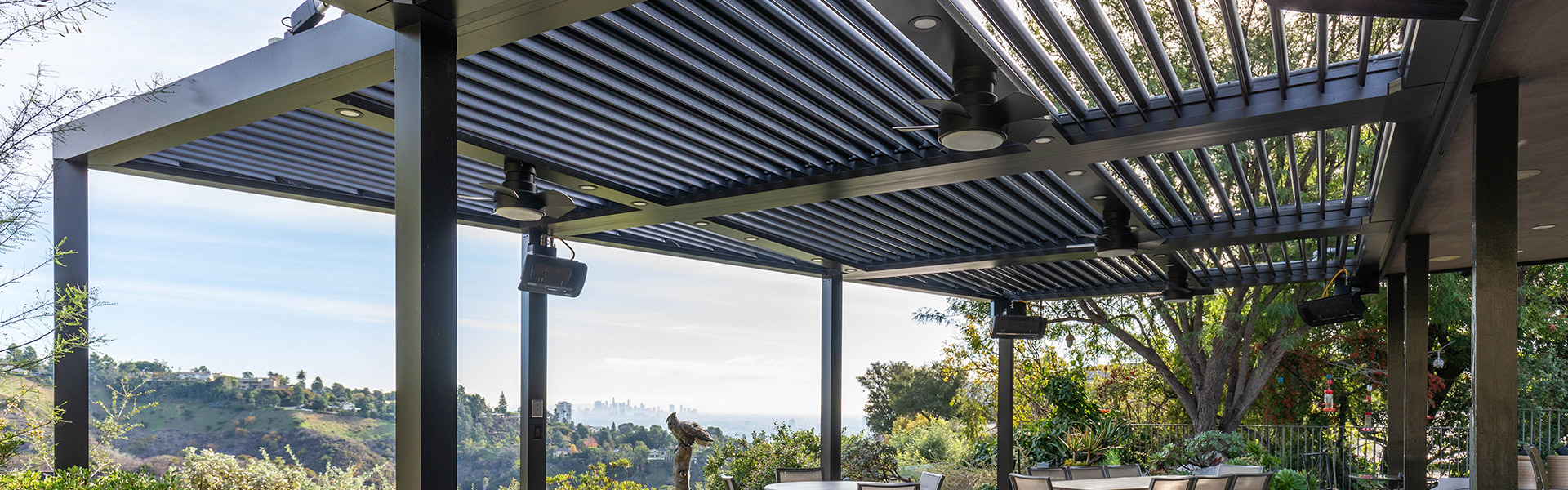
When choosing outdoor shade, consider how much sun, heat, and rain your patio receives. Some patios need full shade all day, while others benefit from morning sun and afternoon shade, which is why many homeowners compare louvered and solid patio covers before deciding.
A louvered patio cover has slats that open or close, allowing you to adjust light and airflow as needed. A solid patio cover has a fixed roof that blocks the sun throughout the day and keeps your patio dry when it rains.
The next sections compare the most important features for your home, including sunlight and rain protection, cleaning, installation, and cost. This helps you choose the best option for your yard and budget.
What Most Homeowners Want From a Patio Cover
Most homeowners look for a patio cover that adds comfort and value. They want shade from UV rays, relief from summer heat, and protection from rain so they can use their patio year-round.
A well-built patio cover can make the space underneath much cooler. Solid or insulated roofs can lower temperatures by 10 to 15 degrees. Durable materials also reduce maintenance and provide better protection for outdoor furniture.
- Sun and rain protection for furniture, grills, and flooring.
- Lower heat and less glare near doors and windows.
- Low-maintenance materials like aluminum or Alumawood.
- Add-ons like fans, lights, or heaters for night use.
- Motorized louvers for sun control and a watertight seal.
- Privacy screens or bug screens near close neighbors.
Style is important for resale value and everyday curb appeal. Your patio cover should match your rooflines and trim colors. A well-built permanent cover can return up to 80% of its cost when you sell your home while also turning your patio into a functional outdoor room.
Choose Between Louvered and Solid Patio Covers
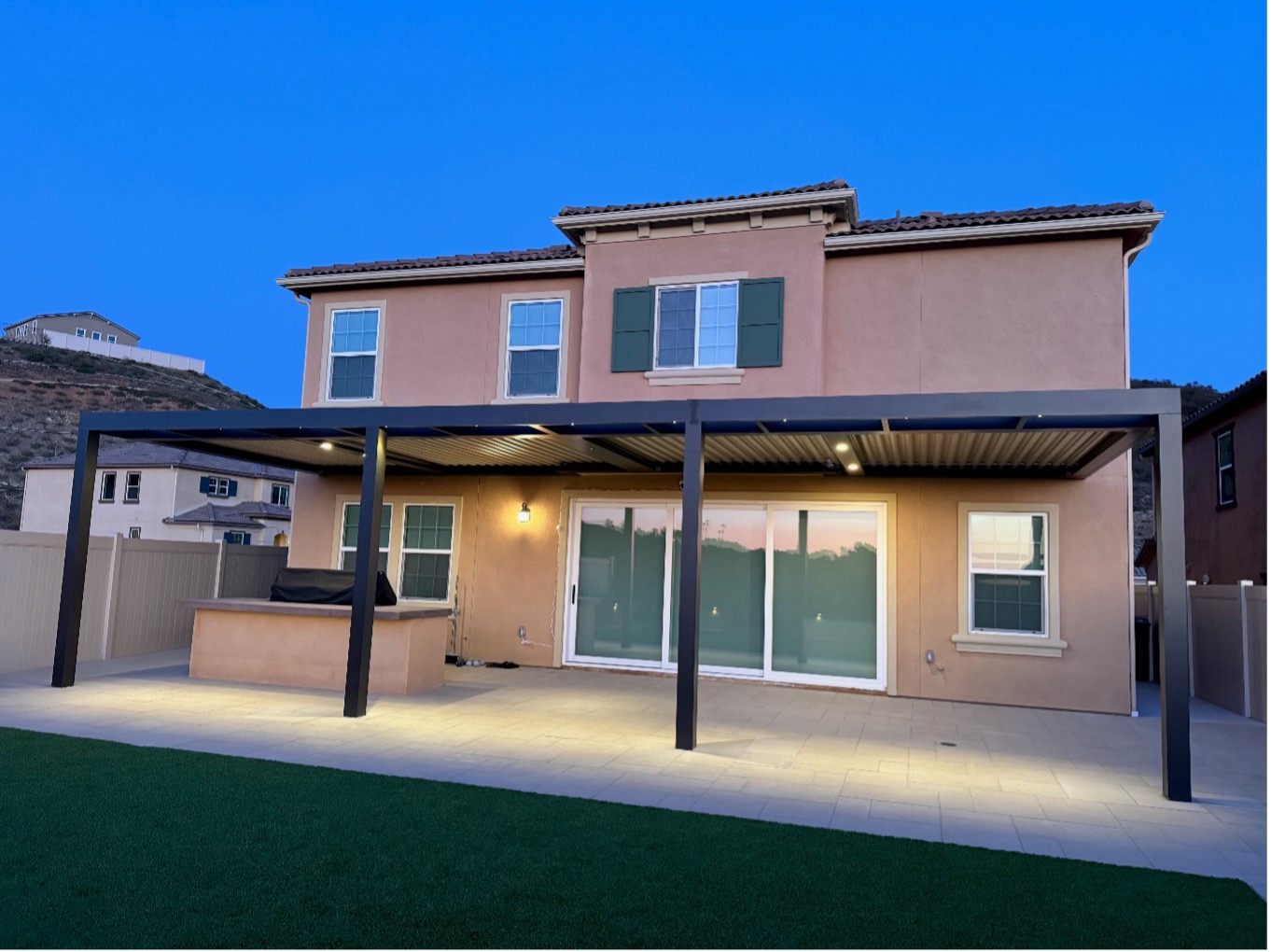
Patio covers provide shade and allow you to use outdoor spaces even in poor weather. They protect patios, backyards, and business areas from sun and rain. Most people choose between two main roof styles for everyday use.
Louvered Patio Covers
Louvered patio covers have adjustable slats that let you control sunlight and airflow. You can open the slats partway for ventilation on warm days or close them completely during rain. Manual cranks or motorized controls make adjustments easy while adding a modern feature.
Solid Patio Covers
Solid patio covers have a fixed roof that provides full-time coverage. They offer strong rain protection and a clean roofline. Many homeowners choose them for outdoor TVs and mounted lighting. With fewer moving parts, they require less maintenance and always provide shade.
Both types offer sun and weather protection in different ways. Choose a louvered cover for adjustable light and ventilation, or choose a solid roof if you prefer fixed shade and consistent rain protection.
How Louvered and Solid Patio Covers Perform in Sun and Rain
Outdoor weather quickly affects patio comfort. Sun, heat, and rain are strongest during peak months, and a well-designed patio cover helps control light while keeping water out.
Some covers adjust to changing weather during the day, while others remain fixed. The table below shows the main differences.
| Feature | Louvered Patio Covers | Solid Patio Covers |
| Adjustability | Slats tilt open or shut | Fixed roof, no moving parts |
| Rain protection | Closes tight, drainage design matters | Full roof cover, fewer leak points |
| Sun control | Slats angle for shade or filtered light | Full shade, no seasonal adjustment |
| Energy impact | Slats reduce heat near doors and windows | Fixed shade, less airflow control |
| Upkeep | Motors and gutters need regular checks | Mostly cleaning and surface checks |
Louvered patio covers in sun and rain
Louvered covers have slats that tilt to control shade levels. Tilting reduces glare and keeps air moving, which can lower heat near indoor doors.
When it rains, closing the slats creates a sealed roof. Water flows into gutters and exits through downspouts. Some curved slat designs may cause splashing near the gutters, but tight seals and clean channels help prevent leaks.
Solid patio covers in sun and rain
Solid covers have a fixed roof that stays closed year-round. They block sun all day and protect furniture from rain. Many people choose them for outdoor TVs and dining areas, and restaurants often use them for steady coverage.
A fixed roof has fewer moving parts and seams, reducing the chance of water intrusion over time. Airflow is more limited, but adding fans or vents can improve comfort during warmer months.
Installation Challenges and Considerations
When choosing between louvered and solid patio covers, consider installation requirements along with weather performance. Design complexity, structural needs, and labor time all affect the final outcome.
This section outlines installation challenges for both cover types, including time, cost, and water management details.
Louvered Patio Covers Installation
Complexity and Customization
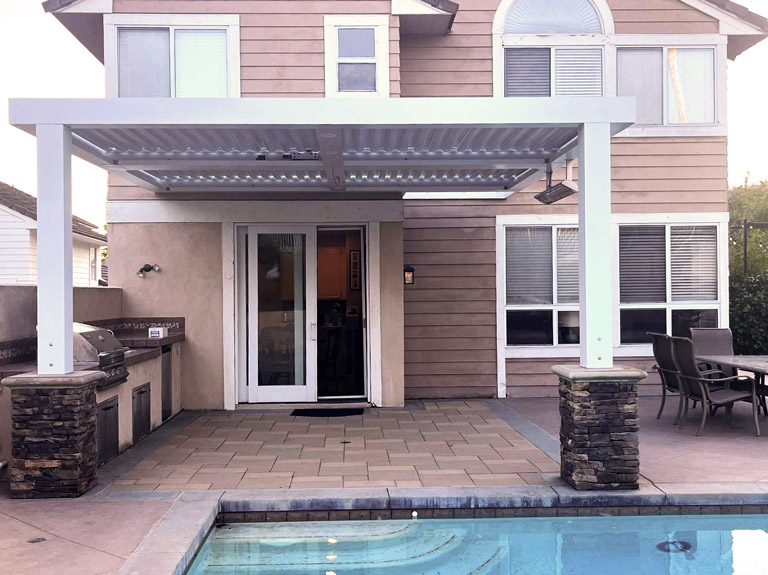
Louvered systems offer many size and feature options, which require precise layouts and measured framing. Crews build reinforced frames to support slats and moving components.
Motor units add extra installation steps. Wiring routes require protected paths and safe connections, while manual systems still require precise alignment.
Drainage and Sealing
Proper drainage design is essential. Crews must plan gutters, downspouts, and water exits carefully. Seals should fit tightly at louver edges and gutter joints.
Poor sealing can cause splashing at the gutter line, and heavy rain can push water into gaps. Clean channels and tight seals reduce leak risk.
Time and Labor Considerations
Installing a louvered roof typically takes three to five days. Custom fitting, wiring, and motor testing add labor time. Electrical work may require permits, and drainage testing adds final steps.
Solid Patio Covers Installation
Simplified Structural Requirements
Solid patio covers have fixed roofs with fewer components. Many systems come in standard sections, allowing crews to focus on posts, beams, and roof connections.
Fewer moving parts reduce tool needs and eliminate motor setup, making the process more direct.
Foundational Considerations
Solid covers still require strong anchoring. Posts attach to decks, footings, or slabs, and some yards require new footings.
Because there is no motor wiring, coordination across trades is reduced, and permit steps may be simpler.
Time Efficiency
Solid covers are usually installed faster than louvered systems. Shorter installation times can lower labor costs and reduce job site errors. Crews can focus on structure, slope, and water flow.
Maintenance Requirements
Regular maintenance keeps patio covers in good condition and preserves appearance. Louvered covers have moving parts that require more frequent checks, while solid covers need less upkeep.
Dust, leaves, and salt air can create buildup, so regular cleaning protects finishes from stains and corrosion.
| Maintenance Aspect | Louvered Patio Covers | Solid Patio Covers |
| Cleaning Frequency | Monthly rinse, plus 2 deep cleans per year | Seasonal cleaning, plus periodic power washing |
| Component Lubrication | Lubricate moving parts and service motor parts | Fixed roof parts need zero lubrication |
| Inspection Needs | Check debris, slat alignment, seals, and drainage paths | Check cracks, fading, fasteners, and joints |
| Professional Servicing | 1 service visit per year for motors and alignment is reccomended | Pro visit when damage, leaks, or sagging shows |
Maintenance of Louvered Patio Covers
Component Lubrication and Cleaning
Louvered covers require regular cleaning and moving-part care. Rinse slats, clean tracks, and clear gutters to ensure smooth operation.
Lubricate hinges and pivot points, inspect motor housings, and keep drainage channels clear.
Seasonal Adjustments
Seasonal debris and weather affect maintenance needs. Ice and snow can add weight, while spring storms leave grime. Inspect seals and joints after heavy rain.
Professional Servicing
Annual professional servicing keeps motors aligned and drainage systems clear. Technicians also inspect seals and document service for warranty support.
Maintenance of Solid Patio Covers
Solid covers require surface cleaning and drainage checks. Rinse roofs and beams to remove dirt and pollen, and power wash when needed.
Inspection and Repairs
Solid covers have fewer moving parts than louvered roofs, so there is less risk from motors and gears. However, owners should still check for cracks and loose fasteners once a year.
Look at posts, beams, and roof joints after strong storms. Seal small gaps where water enters seams. Repair early to prevent rot in nearby wood trim.
Minimal Upkeep
Solid covers make it easier to predict maintenance costs. Fixed roofs do not need motor servicing or lubrication of moving joints. Most of the work is just cleaning and yearly inspections.
Repairs focus on finish wear, joint seals, and fasteners. Good drainage keeps water from pooling and staining. Basic care extends service life across many seasons.
Cost Analysis and Return on Investment (ROI)
Most homeowners review price first, then value. Patio cover quotes vary widely by size and features. The goal is balancing budget with long-term performance.
Think about costs in two parts: installation and annual upkeep, including service, cleaning, and repairs.
| Cost Aspect | Louvered Patio Covers | Solid Patio Covers |
| Initial Installation Costs | Higher initial costs due to moving parts | Lower cost due to fixed position |
| Material Costs | Aluminum frame plus motors and sensors | Standard roof parts with fewer extras |
| Maintenance Expenses | More upkeep for motors, joints, and drains | Mostly washing and surface checks |
| Energy Savings Impact | Better sun control near doors and windows | Fixed shade with less airflow control |
| ROI and Property Value | Modern features can help resale appeal | Strong fixed cover adds steady value |
Installation and Material Costs
Louvered Patio Covers
Higher costs come from motors, slats, and drainage systems. Smart features and wiring increase labor and permit needs.
Solid Patio Covers
Standardized materials and simpler builds reduce cost. Fewer moving parts keep installation efficient.
Long-Term Maintenance and Energy Efficiency
Maintenance Costs
Louvered covers need more upkeep during the year. Owners clean slats, clear drains, and keep joints moving well. Motor parts can need service after years of use.
Solid covers need less maintenance. Most owners just wash the roof and check the fasteners once a year. Repairs are less common because the parts do not move.
Energy Efficiency Benefits
Louvered slats help block strong sunlight near your home. You can tilt the slats when the sun shines on your windows, which can reduce indoor heat and lower your air conditioning use.
Solid roofs block the sun in a fixed way. Shade helps, yet airflow control stays limited. Many homeowners add fans to keep air moving.
Applications in Residential and Commercial Settings
The right patio cover depends on how the space gets used. Homes focus on comfort, shade, and daily family time. Businesses focus on guest comfort and usable seating in more weather.
Both types of covers protect against the sun and rain, but in different ways. Louvered roofs let you adjust light and airflow throughout the day, while solid roofs provide the same coverage all day long.
Residential Applications
Louvered Patio Covers in Homes
Louvered covers work well for patios used at different hours. Slats tilt to reduce glare and keep air moving. Slats also close during rain to protect outdoor furniture.
Controlling the sun can help keep rooms near windows cooler. Less sunlight on the glass means less indoor heat. Many homeowners also like the modern look of louvered covers on newer homes.
Solid Patio Covers in Homes
Solid covers are a good choice for families who want constant coverage every day. A fixed roof blocks the sun and keeps patios dry during rain. It is also great for outdoor TVs, lights, and fans.
Solid roofs help turn your patio into an outdoor room with constant shade. Your furniture stays covered without needing daily adjustments, and sudden weather changes are less of a problem under a fixed roof.
Commercial Applications
Louvered Covers for Restaurants and Hotels
Restaurants and hotels use louvers to keep patios open longer. Staff can open slats during cool hours to let in sunlight. Staff can close slats during rain to keep tables dry.
Louvers are also useful for pool areas where sun exposure changes throughout the day. Guests get shade when the sun is strong, and the louvers help with airflow during warm hours.
Solid Covers for Business Environments
Solid roofs are a good fit for businesses that need full shade all day. Outdoor TVs and screens work better under steady shade, and a solid roof also protects seating during rain.
Fixed roofs can help during permit reviews in strict areas. Install work can move faster with fewer moving parts. Service calls can drop with fewer motor parts.
Final Thoughts
Choose the cover that matches how you use your patio. Some homeowners want adjustable light and airflow, while others prefer full-time coverage with less upkeep.
Louvered covers cost more but offer greater control and potential resale appeal. Solid covers provide fixed coverage at a lower cost and work well for outdoor rooms and media setups.
Consider climate, installation needs, maintenance time, and total cost. Choosing the right system for your yard and routine helps ensure long-term satisfaction after installation.